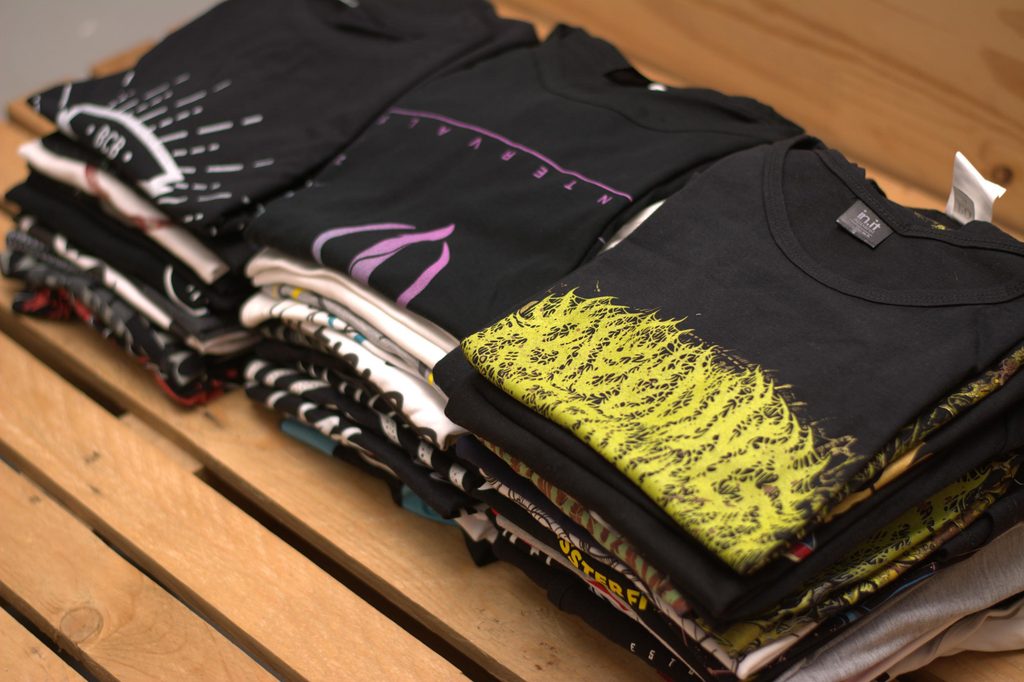
Your T-shirt can be more than just clothing. It can be a reflection of your personality, interests, mood and personal style. But with so many graphic T-shirts and printed T-shirt designs available today, creating something that genuinely feels like you can be challenging.
Whether you’re exploring T-shirt design ideas for beginners, planning a custom T-shirt design, or simply looking for inspiration for your next streetwear look, the key is not to follow every trend.
The key is to find a design that represents you.
In this guide, we’ll explore how to create a T-shirt design that feels personal, unique and wearable—from finding inspiration and choosing colours to selecting graphics, typography and the right T-shirt style.
What Makes a T-Shirt Design Feel Personal?
A good T-shirt design doesn’t necessarily need to be complicated.
Sometimes, a simple word, symbol, illustration or colour combination can say more about you than a crowded graphic.
A personal T-shirt design usually has something behind it—a memory, interest, belief, hobby, aesthetic or idea that you connect with.
Before starting your design, ask yourself:
- What do I like?
- What represents my personality?
- What kind of clothing do I naturally wear?
- Do I prefer minimal or bold designs?
- What colours do I feel comfortable wearing?
- What message or idea would I actually want to put on a T-shirt?
Your answers can become the foundation for your T-shirt design ideas.
1. Start With Your Personality, Not the Trend
One of the easiest mistakes when creating a T-shirt is starting with whatever is currently trending.
Trends can provide T-shirt design inspiration, but they shouldn’t completely determine your design.
Instead, think about what makes your style different.
For example, if you love:
- Music → explore lyrics-inspired typography or abstract sound-related graphics.
- Travel → experiment with maps, coordinates or destination-inspired illustrations.
- Art → explore unusual shapes, illustrations or visual compositions.
- Minimalism → consider clean typography and simple symbols.
- Streetwear → experiment with bold graphics, oversized placements and expressive typography.
The goal is to create something you would still want to wear even after the trend disappears.
2. Collect T-Shirt Design Inspiration
Great designs rarely appear from nowhere.
Start collecting things that catch your attention.
Look at:
- Posters
- Album artwork
- Photography
- Architecture
- Vintage graphics
- Typography
- Illustrations
- Streetwear
- Packaging
- Nature
- Movies and music
- Everyday objects
Create an inspiration folder or moodboard and look for patterns.
You might notice that you repeatedly choose certain colours, fonts, shapes or visual styles. Those patterns can help you discover your own creative direction.
For colour exploration, tools such as Adobe Color can help you experiment with colour relationships and create cohesive palettes.
External resource: Adobe Color — useful for exploring colour combinations and palettes.
3. Choose Your T-Shirt Design Style
There isn’t one correct style for a T-shirt.
Your design can be minimal, artistic, bold, humorous, experimental or heavily graphic.
Minimal T-Shirt Design
A minimal T-shirt design usually relies on simplicity.
Think:
- Small graphics
- Simple typography
- Limited colours
- Clean lines
- Subtle symbols
Minimal designs can work particularly well when you want your clothing to feel understated and versatile.
Graphic T-Shirt Design
A graphic T-shirt design gives the visual element more attention.
It could include:
- Illustrations
- Characters
- Abstract artwork
- Typography
- Patterns
- Symbols
- Multiple visual elements
Streetwear T-Shirt Design
A streetwear T-shirt design often uses stronger visual statements, unusual typography, oversized graphics or distinctive compositions.
The important thing is consistency.
Your design style should match the personality you want your clothing to communicate.
4. Turn Your Idea Into a Concept
Once you’ve identified your style, turn your thoughts into one clear concept.
Suppose your idea is:
“I want a T-shirt that represents my love for late-night city life.”
Instead of immediately designing a random graphic, break the concept down.
Concept
Late-night city life
Possible visual elements
- City skyline
- Street lights
- Coordinates
- Moon
- Neon-inspired typography
- Abstract buildings
Possible message
A short phrase or word connected to the concept.
Possible colour palette
Choose two or three colours that communicate the mood.
Now you have a direction rather than simply a collection of random T-shirt graphic ideas.
5. Keep Your T-Shirt Design Focused
More elements don’t automatically make a design better.
If you combine five fonts, ten graphics and several unrelated colours, the final result can become difficult to understand.
Try giving your design one main focal point.
Ask:
What should someone notice first?
Then decide what should support that element.
A useful structure is:
Main element → Supporting element → Small detail
For example:
Large graphic → Short phrase → Small A18-style signature detail
This creates hierarchy and makes the design easier to understand.
6. Choose Colours That Feel Like You
Colour can dramatically change the personality of a T-shirt.
A bright palette can feel energetic.
Muted colours can feel understated.
Dark combinations can feel bold or dramatic.
Pastel colours can create a softer aesthetic.
Instead of using every colour you like, choose a controlled palette.
For A18, your existing brand palette of light yellow, bottle green, sky blue and white can become part of your visual identity.
You don’t have to use all four colours in every T-shirt design. Instead, experiment with combinations that maintain a recognisable A18 feel.
For example:
Bottle green + light yellow
or
Sky blue + white
or
Bottle green + white + a small light-yellow accent
Colour relationships and context can influence how a design is perceived, so testing your palette against the actual T-shirt colour is important. Adobe’s design resources also recommend using colour relationships and intentional palettes when developing designs.
7. Typography Can Become the Design
You don’t always need a large illustration to create an interesting T-shirt.
Typography itself can become the main visual element.
Experiment with:
- Font size
- Letter spacing
- Line spacing
- Uppercase vs lowercase
- Font combinations
- Text placement
- Curved text
- Stacked text
A short phrase can sometimes become a strong creative T-shirt design when the typography is handled well.
Before choosing a font, ask:
Does this typeface match the personality of the message?
A playful message probably shouldn’t use a rigid corporate-looking font.
Similarly, an elegant concept may not work with an overly aggressive typeface.
8. Think About Where the Design Will Go
The same artwork can feel completely different depending on its placement.
Common T-shirt design placements include:
Front Chest
A smaller design placed around the chest area can create a clean and minimal look.
Centre Front
A larger graphic can become the main focus of the outfit.
Back Print
A large back graphic can work particularly well for streetwear T-shirts.
Front + Back
A small front graphic combined with a larger back design can create a more detailed look.
Sleeve
A small graphic or wordmark on the sleeve can add a subtle detail.
When planning your design, think about the T-shirt as a complete garment—not just a blank rectangle.
9. Choose the Right T-Shirt Fit
Your artwork and your garment should work together.
A large graphic may look very different on a regular-fit T-shirt compared with an oversized graphic T-shirt.
For example:
Minimal graphic + regular fit
→ clean and everyday
Large graphic + oversized fit
→ stronger streetwear aesthetic
Small chest graphic + oversized fit
→ understated and contemporary
The design should complement the silhouette rather than compete with it.
If you’re building a collection, consistency between your artwork and your chosen fits can also help create a stronger visual identity.
10. Create Your Own T-Shirt Design
You don’t necessarily need advanced design skills to start.
Begin with a simple concept and gradually build it.
Tools such as Canva provide T-shirt templates and allow users to customise text, colours, illustrations and other design elements.
A simple beginner workflow is:
Idea → Moodboard → Concept → Colour palette → Typography/graphics → Placement → Mockup → Final design
Don’t worry about making your first design perfect.
Create several versions.
Compare them.
Remove unnecessary elements.
Then keep the strongest version.
11. Make It Unique—Without Making It Complicated
A unique T-shirt design doesn’t necessarily mean creating something nobody has ever seen before.
Uniqueness can come from your combination of elements.
For example:
Original idea + distinctive typography + A18 colour palette + unusual placement
can create something that feels different even when each individual element is familiar.
Your goal isn’t to make a design that everyone likes.
Your goal is to make a design that the right person connects with.
That’s especially important for print-on-demand T-shirts, where a strong concept can help a product stand out in an increasingly crowded online clothing market.
12. Test the Design Before You Print It
Before turning your custom T-shirt design into a finished product, test it.
Put the design on a realistic T-shirt mockup.
Then look at it from different distances.
Ask:
- Is the text readable?
- Is the graphic too large?
- Does the design work with the T-shirt colour?
- Does the placement feel natural?
- Would I actually wear this?
- Does it look good with jeans or cargos?
- Does it fit the overall A18 aesthetic?
If possible, show the design to a few people whose style you understand.
Don’t ask only:
“Do you like it?”
Instead ask:
“What do you think this T-shirt is trying to say?”
Their answer can tell you whether your visual idea is communicating what you intended.
13. From Design Idea to A18 T-Shirt
At A18, the idea behind a T-shirt can be just as important as the graphic itself.
A great design starts with a thought, becomes a concept and eventually turns into something you can wear.
That’s the thinking behind creating graphic T-shirts, printed T-shirts and streetwear-inspired clothing that feel connected to personal style.
If you’re looking for your next piece, explore the A18 T-Shirts and Oversized T-Shirts collections.